
Roofing
Commercial Roofing in Mississippi
Commercial roofing for offices, retail, industrial and multi-family across central Mississippi. TPO, EPDM and PVC systems installed and repaired to written scopes and schedules you can plan around.
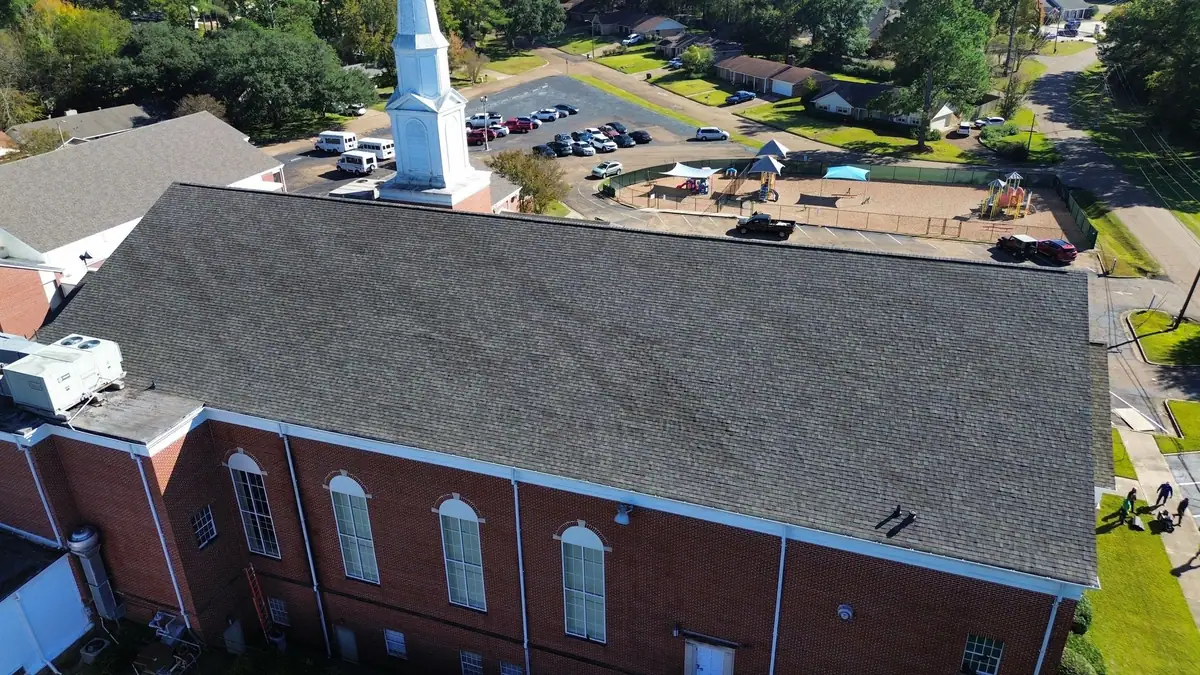
On the roof
Commercial Roofing for Metro Buildings That Cannot Sit Open
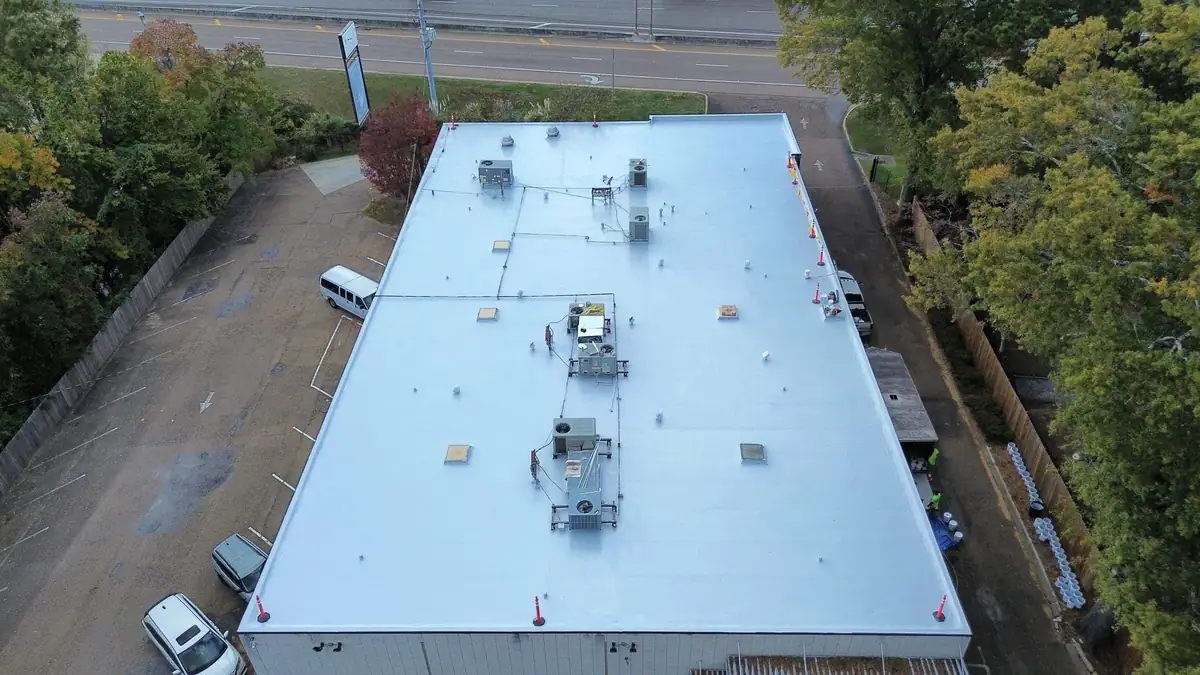
Commercial roofing in central Mississippi is judged by downtime, drainage and documentation as much as by membrane brand. Offices, retail, warehouses, churches and multi-family buildings need a crew that can stage around tenants, protect inventory and close the roof before the next Gulf storm.
On a low-slope building, seams, parapet flashings, rooftop HVAC curbs and ponding water decide whether it stays dry, so we specify the system for the deck, use and warranty path instead of pushing one membrane on every square foot.
Repair, re-cover or full tear-off, you get a written scope, a schedule that accounts for weather, and one contractor with a name on the job.
Most of our work still comes from word of mouth. We set expectations up front, we do not over-promise, and nothing reaches your bill that you did not approve first.
Credentials
Licensed through the Mississippi State Board of Contractors, license 25203-MC. BBB accredited with an A+ rating since 2018. Home Builders Association and Rankin County Chamber members.



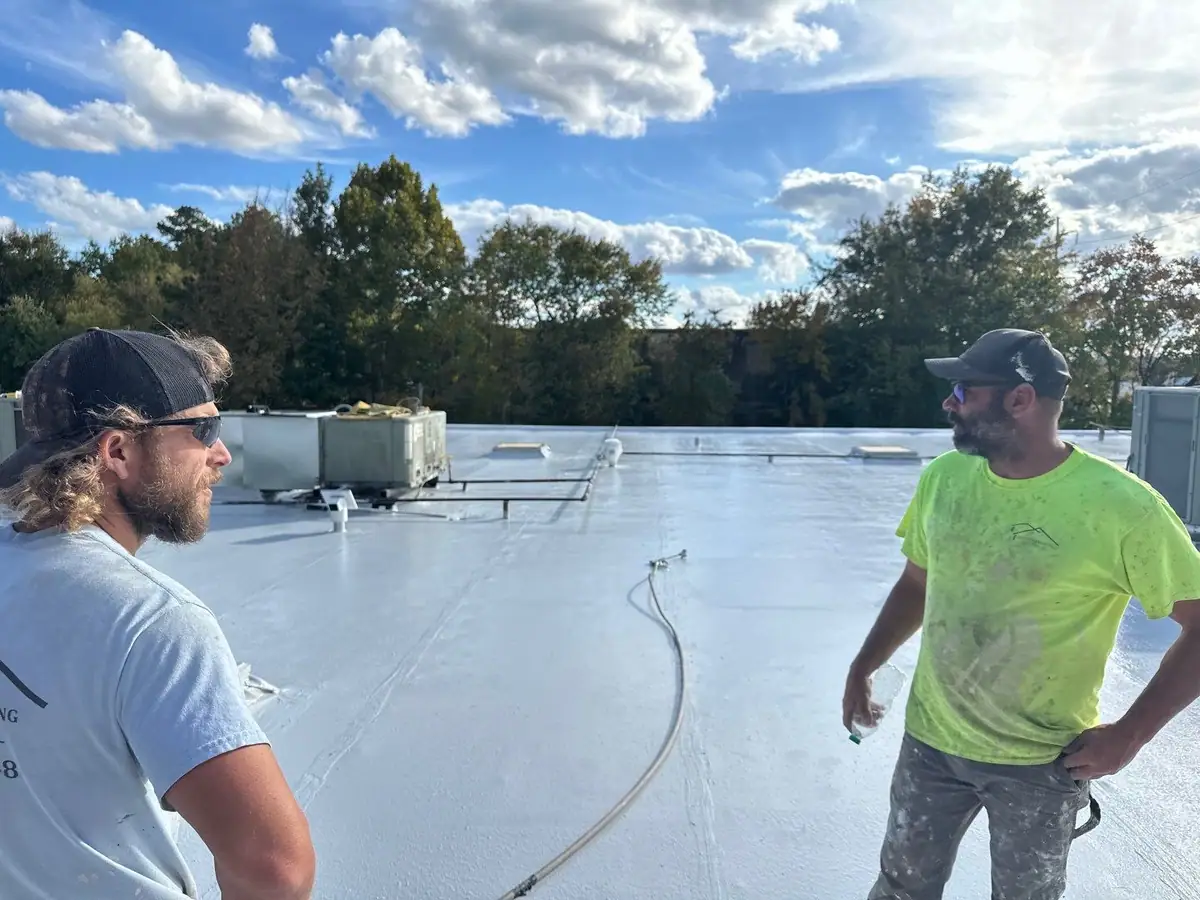
In the field
Safety, Insurance and Jobsite Conduct
Occupied commercial sites get fall protection, controlled access and daily cleanup that leaves no fasteners in parking lots, as standard practice.
Certificates of insurance are available for property managers and owners who need them on file before mobilization.
We coordinate with other trades when HVAC, solar or coating contractors share the roof. Cutting a new curb after the membrane is finished is how leaks get designed into a project.
If storm damage is part of the file, we keep photo reports and line items tied to the roof you own, not a generic template.
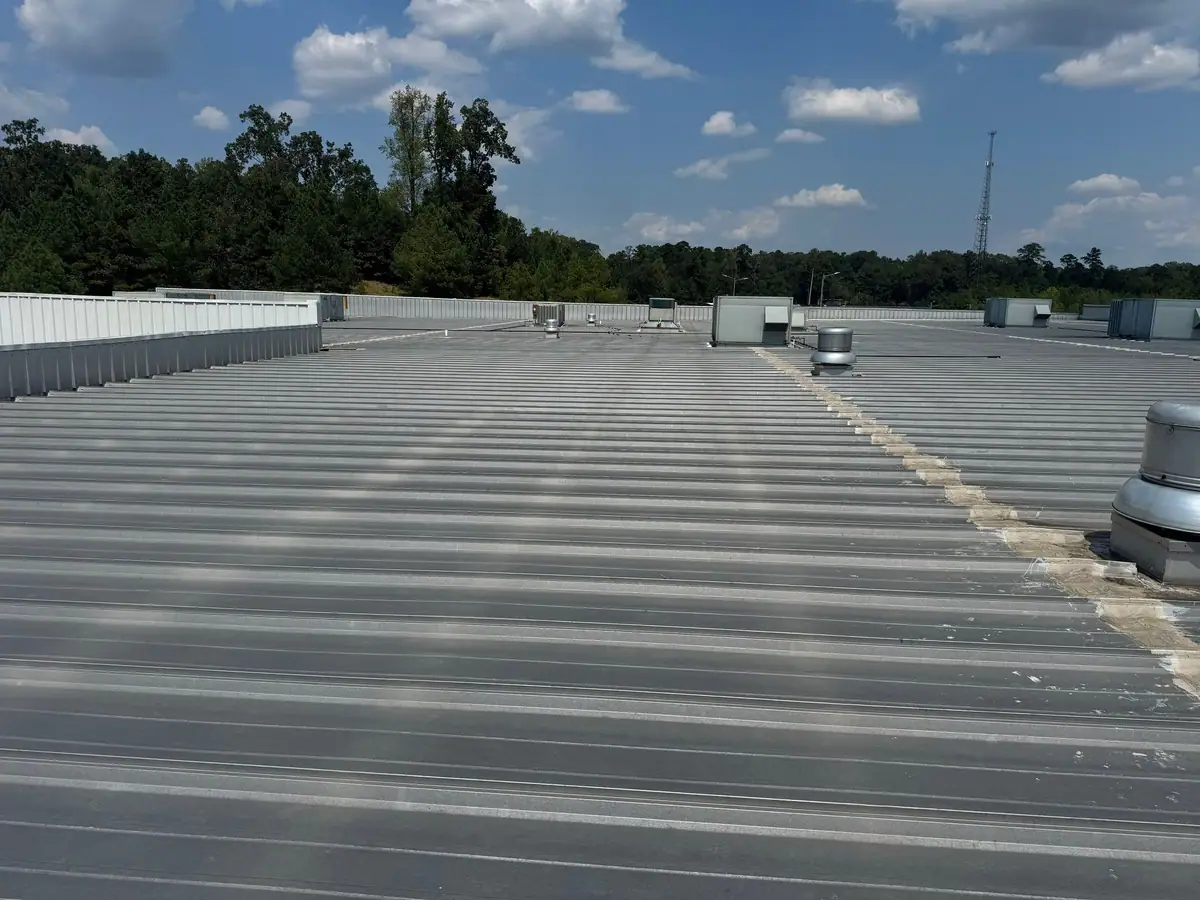
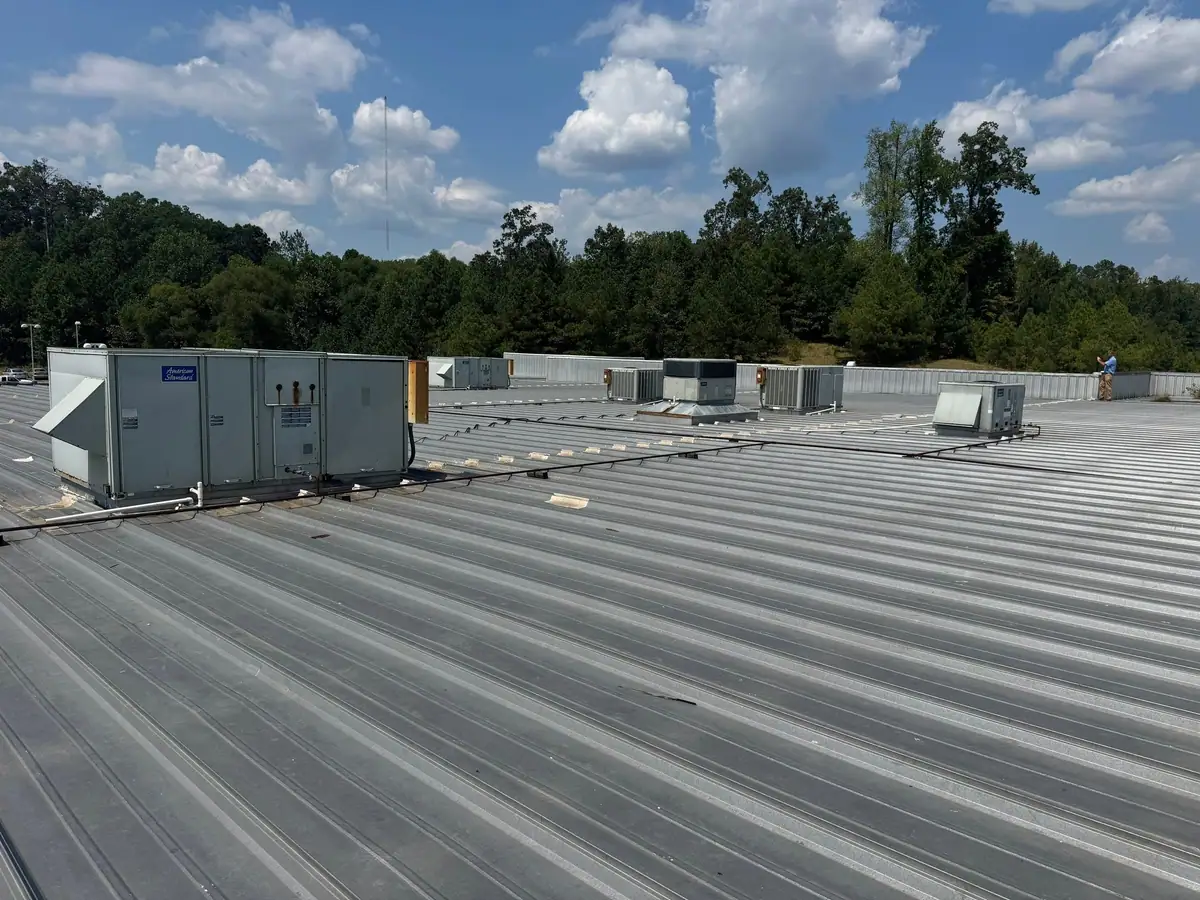
On the roof
On Commercial Roofs Around the Metro
Membrane systems
TPO, EPDM and PVC: Matching the Membrane to the Building
Cover boards, insulation thickness, taper for drainage and attachment method are part of the membrane decision. Tear-off versus re-cover follows code, moisture, structural capacity and manufacturer rules, and a cheap membrane over wet insulation is not an upgrade.
- TPO
- Common on newer commercial roofs here. Reflects heat, welds cleanly when installed correctly, and fits many budget and energy goals. Thickness, fastening pattern and weld quality matter more than the brand on the roll.
- EPDM
- Strong choice on many existing buildings, especially where black membrane is already in place or a ballasted or fully adhered assembly is preferred. Repairs need compatible materials, not a hardware-aisle tube of sealant.
- PVC
- For chemical resistance, grease exhaust or specific warranty programs, including some restaurants and industrial uses. We will not sell PVC when TPO or EPDM is the better fit for the deck and budget.
Building types
Offices, Retail, Industrial and Multi-Family
Building use drives schedule, staging and how much risk a leak carries. Leak diagnostics on a clearly flat assembly live on flat roof repair.
Office and retail
Quiet installs, clean staging, and after-hours or phased work so customers and staff keep using the building. Material drops, dumpsters and fall protection are planned around them.
Industrial and warehouse
More rooftop equipment, more penetrations and higher stakes if water hits inventory. Equipment access and facility coordination are settled in the pre-job meeting, not on day one.
Multi-family
Residential expectations on a commercial assembly. Owners care about unit interiors, resident notice and liability, and occupied buildings get the same care as a single-family home.
Churches, schools and civic
Weekend or break-period schedules and clear communication with boards or facilities staff.
Paths we price
Repair, Maintenance and Full Replacement Paths
Not every commercial call is a full tear-off: seam repairs, flashing rebuilds, drain work and maintenance inspections after major storms and before hurricane season make sense while the field and insulation are still sound. Our roof repair page covers how we decide when a roof is past patching.
How We Price and Schedule Commercial Work
Commercial roofing quotes start on the roof: core or cut samples when moisture is suspected, field measurement, and a list of penetrations and rooftop equipment. A satellite estimate is not a number you can take to a board or lender.
You receive a written, itemized scope: membrane, insulation, taper if required, flashings, edge metal, sheet metal, disposal and any temporary protection. A repair-and-hold alternate can sit next to a full replacement option.
Schedules account for weather, material lead times and building use. Phased roofs keep part of the building dry while another section is open, and no opening is left overnight without a dry-in plan you agreed to.
Change orders only happen for documented conditions, such as wet insulation beyond test cuts or structural issues found after tear-off. You see the condition and the price before that work proceeds.
More roofing services
Areas we serve
Common questions
What commercial roofing systems do you install?
TPO, EPDM and PVC, selected for the deck, drainage, rooftop equipment and warranty path. Insulation, cover board and edge metal are part of the same scope.
Can you work on occupied buildings?
Yes. Staging, phasing and fall protection are planned around tenants and staff, with after-hours or weekend work when the building requires it.
Do you repair commercial roofs or only replace them?
Both. Seam, flashing and drain repairs are common when the field is still sound. We recommend replacement when moisture in the assembly or overall wear makes repairs a short delay, not a fix.
Can you coordinate with HVAC or other rooftop trades?
Yes. Sequencing curbs, units and membrane work keeps leaks from being designed in. Tell us who else is on the roof before we mobilize.
Don't know where to start?
Call the office, or tell us about the job online and get one written quote.