

Roofing
Flat Roof Repair in Mississippi
Flat roof repair and low-slope replacement for central Mississippi buildings. Seams, drains, flashings and full membrane systems handled with an owner on every job, written scopes and honest repair-versus-replace advice.
On the roof
Flat Roof Repair for Drainage, Seams and Real-World Mississippi Rain
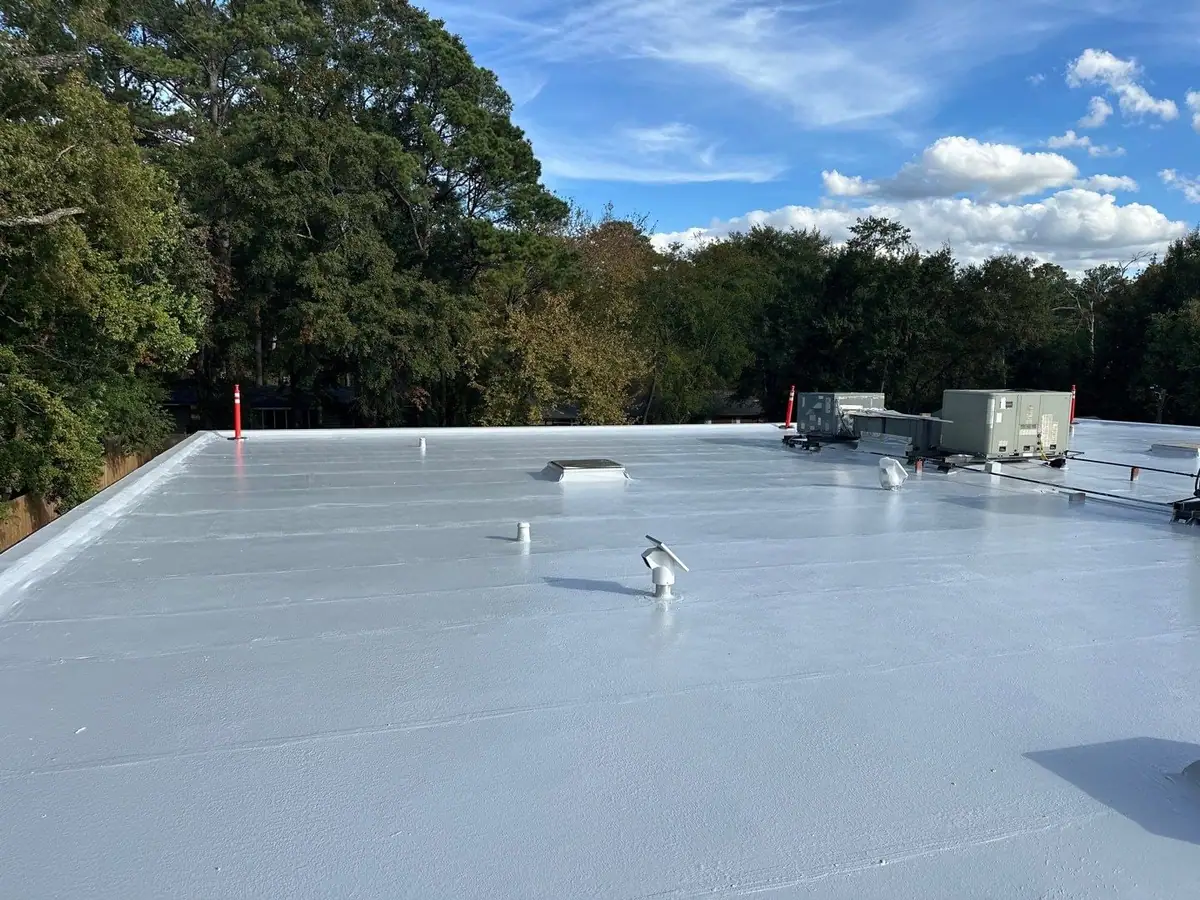
Flat and low-slope roofs do not shed water the way a steep shingle roof does. They rely on drains, scuppers, taper and sealed seams. When any of those fail, ponding water finds every weak joint, especially in the heavy central Mississippi rains from spring through hurricane season.
Flat roof repair starts with diagnostics: is it a seam, a flashing, a clogged drain, wet insulation or a membrane at the end of its life? Coating over wet materials or open blisters is not a repair. It is a delay with a fresh color.
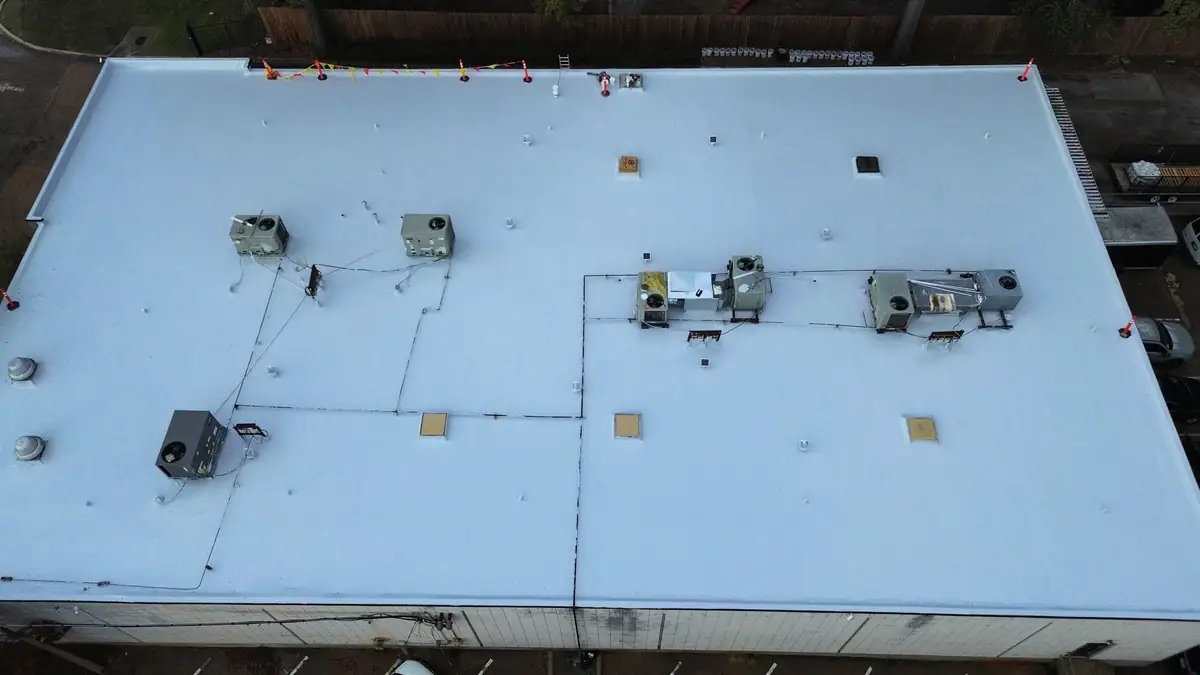
Building-wide system selection and capital planning live on commercial roofing. This page is where we stop the leak and tell you what the assembly has left. Low-slope porch roofs, additions and modern low-pitch houses get the same physics at smaller scale.
There is no sales team here. You talk to Jacob or Jordan directly, and a superintendent runs every job.
Credentials
Licensed through the Mississippi State Board of Contractors, license 25203-MC. BBB accredited with an A+ rating since 2018. Home Builders Association and Rankin County Chamber members.



Where water wins
Why Flat Roofs Fail Differently Than Steep Roofs
On a flat roof, water lingers. Even a quarter-inch depression can hold a pond after a Gulf storm.
Flashings first
Most leaks start at parapet walls, equipment curbs, pipes, skylights and edge metal. The field can look fine while a curb has pulled free or a termination bar has loosened.
Wet insulation
Saturated boards lose R-value and can rot wood decks or corrode metal ones. A patch on top does nothing underneath, so core cuts or moisture scans matter on a roof with a long leak history.
Wall interfaces
Clay soil and aging structures shift walls and parapets, and counterflashings that once sealed open a gap that feeds water behind the membrane.
Traffic and UV
Foot traffic to HVAC units, UV and thermal movement work on seams that stay wet. Flat roofs fail at details under daily use, not in the middle of the field.
Hail you cannot see
Hail bruises membrane, cracks flashings and dents edge metal, and none of it shows from the parking lot. After a major storm the roof is worth walking. If it turns into a claim, our storm damage roof repair process covers the documentation.
Repair chemistry
TPO, EPDM, PVC and Older Built-Up Assemblies
Repair materials have to match the membrane. Mixing chemistries is how patches peel in Mississippi heat.
- TPO
- Compatible membrane, proper welding or approved details, and clean bonding surfaces. Patches that skip weld procedure fail early.
- EPDM
- Compatible tapes, adhesives and flashings. Roof cement on EPDM is a common short-term fix we replace with materials that belong on that system.
- PVC
- PVC-compatible details, especially around grease-prone restaurant exhausts or chemical exposure.
- Built-up / modified
- Still common across central Mississippi. Options include targeted flood coats, flashings, or recovery or tear-off into a modern single-ply. We assess condition before promising a coating miracle.
Repair first
Repair Paths Before Full Replacement
Isolated seam failures, pipe boots, drain rings, curb flashings and drain or scupper work are honest flat roof repair while the field and insulation are still dry. When moisture maps show widespread wet insulation or the membrane is brittle across large areas, the answer moves to replacement, and our roof repair page covers how we make that call.
Full Flat and Low-Slope Replacement When Repair Is Not Enough
Full replacement on a flat roof is a system decision: membrane, insulation thickness, cover board, taper, attachment method and edge metal. Skipping taper to save money is how new roofs pond in the same spots as old ones.
Tear-off reveals the deck. Soft wood, rusted metal deck or wet lightweight concrete fill changes the scope, so we plan inspection openings and contingency language up front.
Re-cover over a dry, code-compliant roof can be valid when manufacturer and local rules allow it. Re-cover over wet materials just locks problems under a new sheet.
Occupied buildings get phasing and daily dry-in, written into the plan, because overnight weather risk matters to retail and multi-family owners.
Equipment and traffic
HVAC Curbs, Traffic and Rooftop Equipment
Flat roofs are work platforms, and equipment and foot traffic decide how long a good membrane stays dry.
Walk paths
Service techs walk flat roofs constantly. Walk pads and set routes reduce wear, especially in summer heat.
New HVAC curbs
Units need curbs and flashings integrated with the roof, not sleepers that block drainage.
Abandoned penetrations
Remove and close them correctly. Every unused pipe left in place is a future leak waiting for a cracked seal.
Grease and exhaust
Kitchen exhaust attacks some membranes faster than office air, so those roofs need materials and maintenance that match.
More roofing services
Areas we serve
Common questions
What causes most flat roof leaks?
Failed flashings at walls and equipment, open seams, clogged drains and ponding water. A curb or parapet detail is often the real entry point.
Can you repair TPO, EPDM and PVC roofs?
Yes, with methods and materials compatible with each membrane. Older built-up and modified systems are assessed case by case.
Is coating a good flat roof repair?
Coatings can help some sound roofs as maintenance, but they do not fix wet insulation, open flashings or widespread membrane failure. We will say when a coating fits and when it does not.
How long does flat roof repair take?
It depends on the scope. Larger areas, drain rebuilds or phased commercial work take longer than a small flashing or seam repair, and you get a schedule with the written scope.
Can you work around rooftop HVAC units?
Yes. We detail curbs and flashings and coordinate with mechanical contractors when units are replaced at the same time.
Don't know where to start?
Call the office, or tell us about the job online and get one written quote.